




Introduction
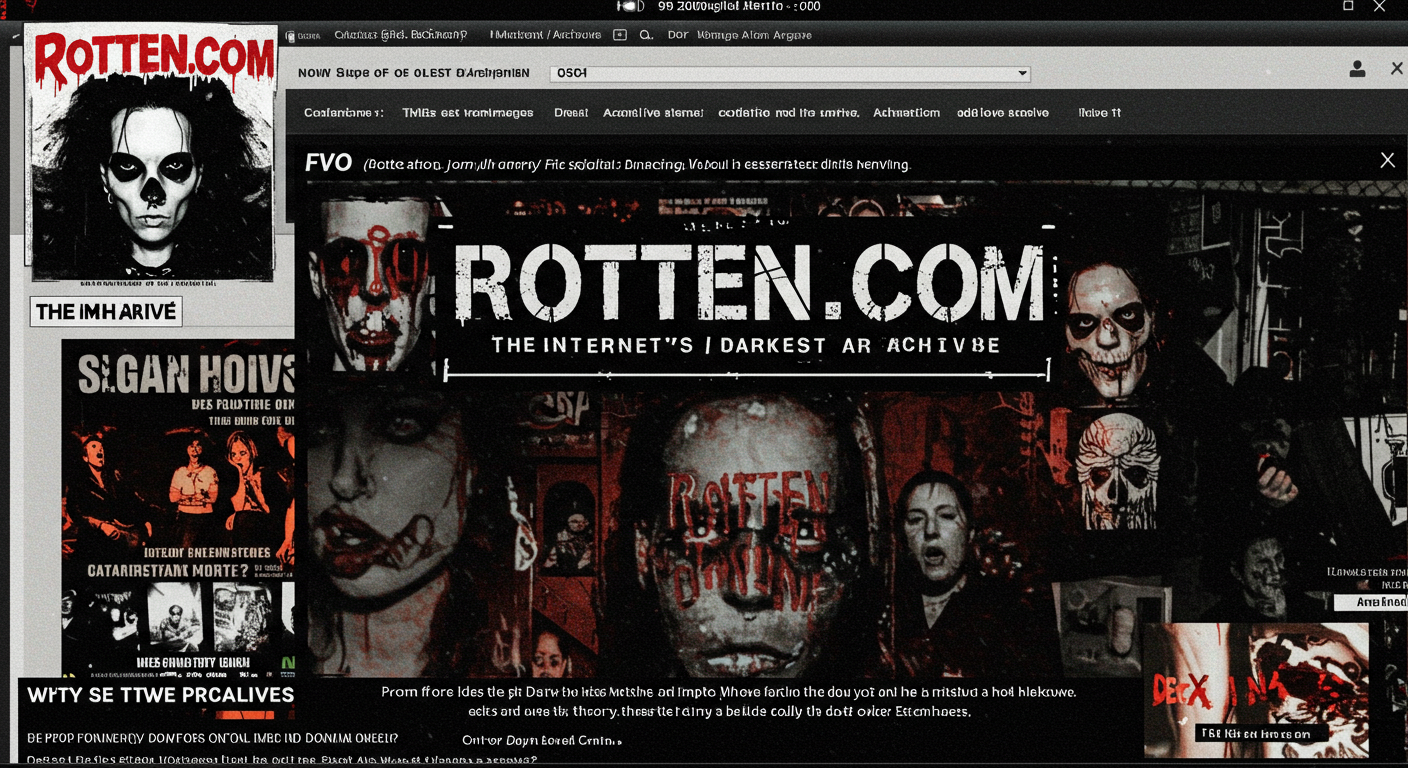
In the early days of the internet, few websites sparked as much controversy, curiosity, and revulsion as rotten.com. Launched in the mid-1990s, it became infamous for its explicit images, controversial archives, and unfiltered documentation of real-life horror. Unlike today’s social media algorithms that sanitize content, Rotten operated in an era of raw internet freedom where boundaries were undefined and censorship was almost nonexistent.
This article explores the complete story of Rotten.com — from its origins and purpose to its impact on web culture, ethical debates, and eventual shutdown. Whether viewed as a digital freak show, a freedom-of-speech experiment, or a cautionary tale of internet excess, rotten.com remains a pivotal moment in web history.
1: The Birth of Rotten.com
A Time Before Filters
Rotten.com was launched in 1996 by a man named Soylent Communications, the pseudonym for creator Tommy DeVoss and later linked to Josh Quittner. The website aimed to collect disturbing, controversial, and “rotten” content from around the world. It was not designed to be humorous or ironic—it was blunt, harsh, and unapologetic.
It operated under the slogan: “An archive of disturbing illustration.” And that’s exactly what it provided.
Hosting and Legal Disclaimers
The creators of Rotten made it clear: users were about to enter a world of disturbing content. The homepage included a disclaimer that advised discretion, and all visitors had to acknowledge this before entering.
The site’s creators chose to host Rotten on servers in Sweden and Russia at various points to avoid U.S. censorship laws. They frequently navigated the murky waters of free speech and internet regulation.
2: What Was on Rotten.com?
Core Content Categories
Rotten.com was notorious for its shock value. It offered graphic imagery that included:
- Autopsy photos
- Crime scene evidence
- Historical death imagery
- Car accident victims
- Celebrity death archives
- Bizarre medical conditions
- War photographs
- Decomposed corpses
But it wasn’t just about gore. The site also included obscure, controversial news stories and strange trivia, presented in a sardonic tone. It became a “freak show” mirror of real life, digitized for the curious or desensitized internet user.
The Rotten Library
This was Rotten’s textual content section, filled with essays, articles, and collections of oddities, including:
- The history of cults
- Serial killer profiles
- Conspiracy theories
- Weird science and fringe beliefs
- Media censorship stories
The Rotten Library reflected the same dark tone as the rest of the site—provocative, irreverent, and confrontational.
3: Cultural Impact and Infamy
Shock Sites Before Social Media
Before platforms like Reddit, YouTube, or TikTok existed, shock sites like Rotten.com filled a niche. Sites such as Stile Project, Bestgore, and Ogrish all drew inspiration from Rotten.
Rotten.com was passed around in email chains, listed in “top 10 disturbing sites” articles, and whispered about on early forums like Something Awful and Fark. Its notoriety made it a rite of passage for many young internet users in the early 2000s.
Desensitization and Curiosity
Many argue that Rotten.com contributed to the desensitization of internet users. The graphic images normalized violence in some circles, while for others, they served as a wake-up call about real-world horrors.
In a way, it challenged the “bubble” of mainstream media. If CNN wouldn’t show you the reality of war, Rotten would.
4: The Controversy and Ethical Questions
Legal Scrutiny
Despite its disclaimer and hosting precautions, Rotten.com was constantly under scrutiny. Various advocacy groups called for its removal, labeling it as:
- Exploitative
- Morally corrupt
- Harmful to minors
However, Rotten.com defended itself as a free speech exercise under the First Amendment, never encouraging the content it hosted, only documenting it.
Ethics of Voyeurism
The real ethical debate was not about legality but morality:
- Was it right to view images of real death for curiosity’s sake?
- Was Rotten documenting reality or exploiting tragedy?
- Where should the line be drawn online?
These questions remain relevant today, especially in the age of viral videos, TikTok challenges gone wrong, and real-time streaming of violence.
5: Shutdown and Legacy
The Slow Decline
By the early 2010s, Rotten.com had started to fade. With the rise of social media, YouTube, and Reddit, the internet became more moderated. Hosting companies became stricter. Web filters grew more advanced. Internet culture shifted from the underground to the mainstream.
By 2012, the original Rotten.com had stopped updating. By 2017, it was officially down.
Where Is It Now?
Some of its pages still exist in web archives like the Wayback Machine, but no official relaunch or mirror site has matched the scale or notoriety of the original.
6: Rotten.com in Retrospect
Was Rotten.com Ahead of Its Time?
It depends on perspective. Technologically, it wasn’t groundbreaking. But culturally, Rotten.com was a canary in the coal mine. It foreshadowed:
- Online moral debates
- Internet freedom vs regulation
- Digital trauma
- Clickbait culture
- The rise of true-crime obsession
Rotten.com’s raw, unfiltered approach to content opened conversations we’re still having today.
The Dual Legacy
- Negative Legacy: Many see Rotten as a descent into internet depravity—a symbol of everything wrong with online anonymity and lack of regulation.
- Positive Legacy: Others argue it represented an unfiltered view of the world and an honest, if harsh, confrontation with mortality, history, and truth.
FAQ Section
What was Rotten.com?
Rotten.com was a controversial shock site launched in 1996, known for hosting graphic images of death, crime, and disturbing real-life events.
Is Rotten.com still active?
No. The original Rotten.com stopped updating in the early 2010s and was completely offline by 2017.
Who created Rotten.com?
The site was created by Soylent Communications, linked to Tommy DeVoss and possibly Josh Quittner. The founders kept a low profile.
Was Rotten.com legal?
Yes, it operated within legal boundaries but often skirted ethical ones. It relied on disclaimers and offshore hosting to avoid censorship.
Why was Rotten.com controversial?
Due to its graphic content, many believed it exploited tragedy and traumatized users, especially minors, while others saw it as a free-speech issue.
Did Rotten.com influence other sites?
Absolutely. It laid the groundwork for later shock sites like Bestgore, LiveLeak, and even influenced early meme and internet subcultures.
Where can I see Rotten.com content now?
Some content is preserved in the Wayback Machine, though with limited access. No official archive exists as of now.
Conclusion
Rotten.com was more than a website — it was a mirror into both the horrors of the world and the darker corners of human curiosity. It was a product of a wilder internet, one less restrained, more dangerous, but also more honest in its raw presentation.
As we navigate today’s sanitized platforms and algorithmically curated feeds, Rotten.com serves as a reminder of what the internet once was — a digital frontier with no rules, no censorship, and no apologies.
Ray-Ban Meta Smart Glasses Review: The Perfect Blend of Style and Technology