






Introduction
The sky was not the limit for Gladys Ingle — it was her stage.
In the 1920s and 1930s, while most people were still coming to terms with the idea of flight, Gladys Ingle was fearlessly walking on wings, hopping from one airborne plane to another, and thrilling audiences around the world. As a member of the legendary stunt team 13 Black Cats, Ingle carved a place for herself in aviation and Hollywood history at a time when women were rarely allowed near cockpits, let alone clinging to aircraft thousands of feet in the air.
This article delves into the daring life and legacy of Gladys Ingle, a woman whose stunts continue to shock even today’s modern viewers. Her story is not just about thrill-seeking—it’s about pushing boundaries, breaking norms, and soaring beyond fear.
read more Mercedes Schlapp Conservative Strategist in U.S. Politics & Media
Who Was Gladys Ingle?
Gladys Ingle was born in 1899, during a time when aviation was still a dream. By the time she reached her early 20s, airplanes had become a marvel of the modern world, and with them came the birth of aerial stunts. Ingle was captivated not just by the idea of flying, but by performing on planes midair—a bold and hazardous act that came to be known as wing walking.
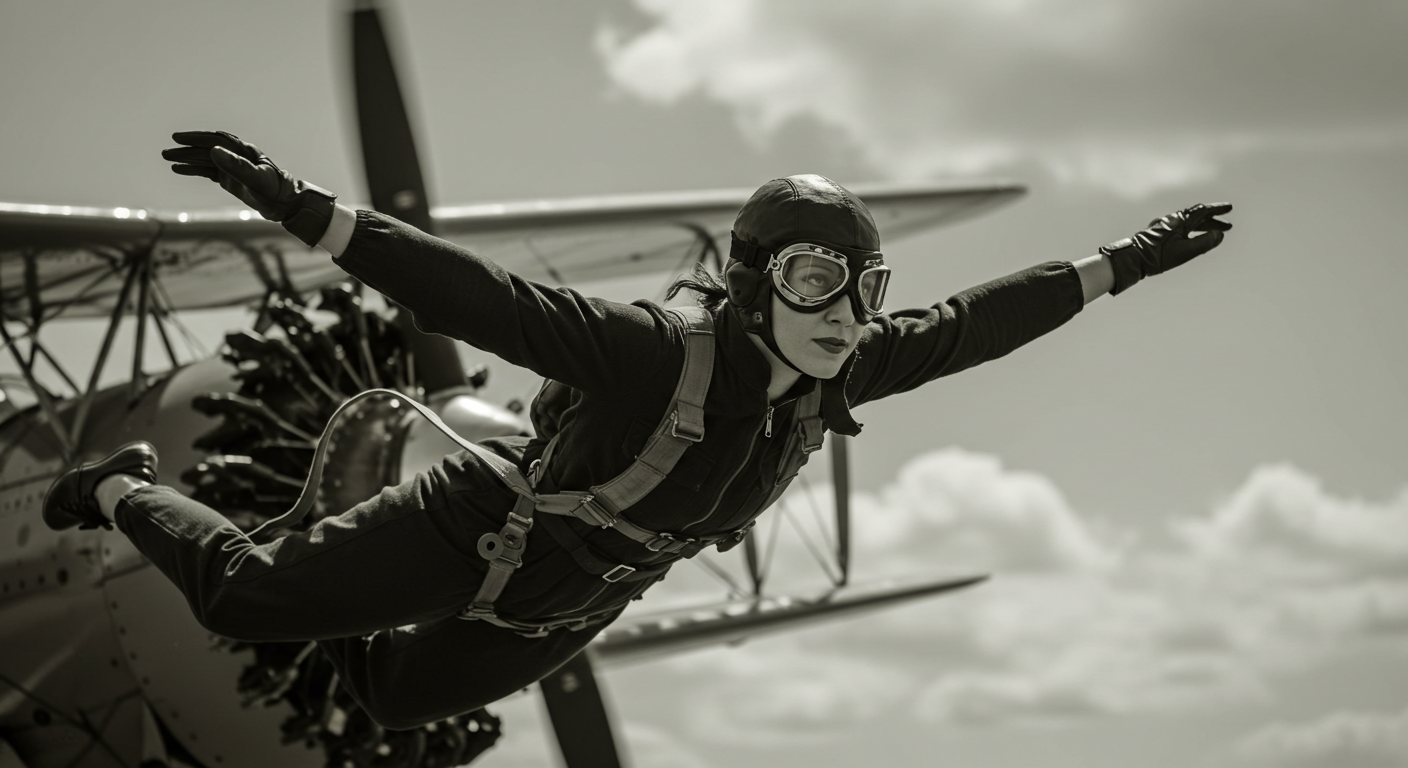
She joined a famous group of aviation daredevils known as the 13 Black Cats, becoming their only female member. Her contribution was not symbolic—Gladys was among the most daring performers in the troupe. She is best remembered for walking between planes in mid-flight, changing tires on landing gear while airborne, and parachuting with style and grace.
Her performances were not only breathtaking but highly technical, requiring precise timing, immense courage, and physical strength.
The Origins of Wing Walking
To understand Gladys Ingle’s impact, it’s important to grasp the origins of wing walking.
Wing walking began as a promotional stunt in the early 20th century, shortly after World War I, when surplus military planes were sold to civilians. Pilots who had served in the war began performing at air shows to make a living. They needed a way to stand out, and so wing walking was born.
Initially, pilots themselves performed stunts. But soon, the acts evolved into more dangerous and dramatic spectacles involving acrobats, stuntmen, and eventually women like Gladys Ingle. Walking across wings, doing handstands on rudders, and even hopping from one plane to another became popular attractions.
Gladys stood out not just as a woman in a male-dominated field but also as a performer who could pull off the most dangerous tricks with style and calm precision.
The 13 Black Cats and Ingle’s Role
The 13 Black Cats was a stunt flying team formed in Southern California in the 1920s. The name was deliberately chosen to evoke intrigue, fear, and superstition—all of which suited the death-defying nature of their performances. They became famous for their daring midair stunts, often performed without any safety gear or harnesses.
Gladys Ingle became the only woman in the group, and perhaps its most famous member. Her presence added spectacle and surprise, challenging traditional gender roles of the time. One of her most famous feats was captured on film: replacing a tire mid-flight while the plane was still in the air.
With only a parachute and a smile, Ingle would climb out of the cockpit and onto the wing, often jumping from one plane to another. Her calm demeanor in such high-risk situations earned her the nickname “the aerialist queen of the skies.”
A Legendary Stunt: The Midair Tire Change
Gladys Ingle’s most iconic stunt was the midair tire change.
In a dramatic scene designed to captivate audiences, a plane would take off with a missing wheel. Gladys would fly up in another plane, carrying a spare tire strapped to her back. Then, in a display of absolute nerve and control, she would walk onto the wing of her plane, leap onto the damaged one, and replace the tire—all thousands of feet above ground.
This wasn’t just a staged stunt. Pilots occasionally experienced real mechanical failures, and Ingle’s skills became invaluable. She once stated that the key to wing walking was “to stay calm and know the air.”
That single performance has become one of the most enduring visuals of early aviation, still watched on YouTube today and cited in documentaries about daredevils and aviation history.
Women in Aviation: A Path Paved by Ingle
While names like Amelia Earhart are often cited in discussions of women in aviation, Gladys Ingle’s contribution was no less significant. She didn’t just fly—she performed gravity-defying feats that most men wouldn’t dare attempt.
Her success in such a dangerous and male-dominated arena made her a pioneer. She showed that women could be not just capable pilots and performers, but icons of courage and innovation.
Her career inspired other women to explore aviation and stunt work, although very few reached the same level of fame or mastery.
Gladys Ingle in Film and Pop Culture
During the silent film era, stunt performers were in high demand. Hollywood studios loved dramatic aerial scenes, and Ingle’s talents were often featured in early aviation movies and newsreels.
She performed stunts for movies, live air shows, and national events. Audiences would gasp as she jumped from planes, stood on one foot on a wing, or parachuted gracefully into crowds.
Even today, archived footage of Gladys Ingle is used in documentaries and history programs to showcase the extreme bravery of early aviation pioneers.
Legacy and Influence
Gladys Ingle’s influence goes beyond her stunts. She remains a symbol of boldness, independence, and the unyielding desire to challenge what seems impossible.
Although her fame dimmed as aviation matured and safety standards became more stringent, her legend never faded among aviation historians and enthusiasts.
In her 80s, Ingle was still proud of her feats. When interviewed later in life, she reflected on her adventures with pride, saying, “We were doing something nobody else could.”
Her work laid the groundwork for generations of stunt performers, particularly women, to step into spaces where they had previously been excluded.
Life After the Spotlight
Unlike many of her contemporaries, Gladys Ingle lived a long and relatively quiet life after retiring from stunt work. She gave occasional interviews and was respected in aviation circles. But she mostly stepped out of the public eye, her wild youth preserved only in grainy film reels and fading newspaper clippings.
Ingle passed away in 1981 at the age of 82, leaving behind a legacy of courage and charisma that remains unmatched in the annals of aerial performance.
Frequently Asked Questions (FAQ)
Who was Gladys Ingle?
Gladys Ingle was a pioneering female wing walker and stunt performer in the 1920s and 1930s. She was known for her fearless aerial stunts and membership in the 13 Black Cats.
What is wing walking?
Wing walking involves performing stunts on the wings of an airplane in flight. This includes walking, standing, or even jumping from one aircraft to another midair.
What was Gladys Ingle’s most famous stunt?
Her most iconic stunt was changing a tire mid-flight. She would leap from one plane to another to install a spare tire while the plane was airborne.
Was Gladys Ingle a pilot?
While she was best known as a wing walker and stunt performer, she also learned to fly and was familiar with aircraft operation, though not a commercial pilot.
What was the 13 Black Cats group?
The 13 Black Cats were a team of Hollywood stunt aviators known for performing risky aerial tricks during the 1920s. Gladys Ingle was the only woman in the group.
Did Gladys Ingle use safety gear?
Ingle rarely used safety harnesses or modern protective equipment. Her parachute was often her only safety measure during midair stunts.
Is there video footage of her stunts?
Yes. Vintage footage of Gladys Ingle, including her midair tire change, is available in public archives and on platforms like YouTube.
Conclusion
Gladys Ingle wasn’t just a stuntwoman—she was a symbol of raw, unfiltered courage. At a time when aviation itself was new and dangerous, she made the skies her playground. Whether standing atop a flying plane, leaping between biplanes, or capturing hearts in silent films, Ingle proved that bravery knows no gender.
Her legacy endures not just in aviation history, but in the very idea that limits are meant to be challenged, and the impossible is always worth attempting.
Ray-Ban Meta Smart Glasses Review: The Perfect Blend of Style and Technology